





Welcome to Dakota Wesleyan University! We want you and your student
to be happy and comfortable here. We've compiled a list of things
you may want to know, especially if this is the first time you are
sending a child to college.
College is not grade 13!
There will be some changes. It is not uncommon for your child to experience
some initial adjustment problems between your home and ours. The rules
may be different. They will not have a curfew here, and may not expect
to have one when they return home. They are likely to develop new habits
regarding work, sleep, studing and eating. They will be sharing a room
with someone and the bathroom with an entire floor. These things may cause
some initial anxiety. It is perfectly normal and generally temporary.
Phones
Each room is provided with local phone service and voicemail. Students will
receive their room phone number with their housing assignment by mail during
the summer. Students need to provide their own telephone. Long distance
service is not available on campus, so it is recommended for students to
use either calling cards or cell phones.
Maintaining contact
College students might not write or call nearly as often as parents wish.
They do so much writing for classes, their recreational writing may be
minimal (or nonexistent). This does not mean that you should stop writing
or calling them, however. Everyone loves to receive news from home and/or
friends. It can be a real day-brightener. It’s a good idea to schedule
the time you will call with your son or daughter - college students have
the most unusual schedules. You could also indicate what the best time
for them to reach you would be. The DWU voicemail system will pick up after
four rings. If it picks up immediately, then someone is already on the
phone. E-mail works great if you have access to it. It is cheaper than
either a phone call or a letter and your child can access it from several
campus locations. All students are provided with an e-mail address that
they keep until graduation.
Involvement outside the classroom
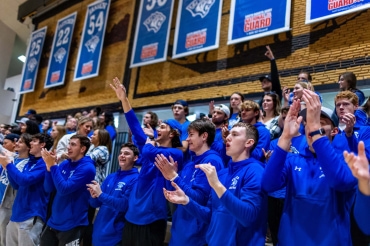
Studies show that students who are involved in campus life are more likely
to stay in school.
When students get to campus, they are searching for a sense of belonging.
So, they look to their peer groups for acceptance and camaraderie.
Getting involved in a campus organization is the best way for them
to belong.
If your child says he/she would like to join a campus group or organization,
encourage it. They can focus on academics while also participating
in activities outside the classroom. Encourage your student to get
involved, you’ll be guiding them on the pathway to both academic
and social success.
Release of Information
College personnel cannot release information regarding your child without
signed permission from your child, even if you are helping with the bills!
(Your child may have several signed releases on campus, each one for different
purposes and pertaining to different information). The Family Educational
Rights and Privacy Act, or FERPA, is a federal law designed to protect
the privacy of a student’s educational records. It applies to schools
receiving funds through a United States Department of Education program.
Once a student enters college, information from his student record cannot
be shared with others, including parents, unless the student gives written
permission. Some records may be disclosed without consent in some special
cases, including health and safety emergencies. For DWU FERPA notification
information, go to http://www.dwu.edu/handbook/code.htm#records.
Laundry
Our machines require 50 cents to wash a load and 25 cents to dry. You may
also want to give them some tips about how to do laundry to prevent him/her
from ending up with the most unusual colors!
Liability
The university does not assume liability for loss or damage from any source.
It is a good idea to check your homeowner’s policy to see if it will
cover your child's property while at school. Most do, but if not, you or
your child may want to look into renter's insurance. It is normally very
reasonable and can save you both a headache later.
Eating habits
Your child's eating habits are likely to change. We offer three meal plans
to meet the needs of most students. S/he may want to snack/eat at times
when the cafeteria is not open, like late-night study sessions. He/She
is experiencing so many new things that it is not uncommon for him/her
to gain weight during the first year - it's called the “freshman
fifteen” and most lose it later.
Change
Life changes dramatically when a student goes to college. There will be adjustments
that must be made and at times they can seem overwhelming. However, this
time should be viewed as:
- an opportunity for growth;
- a chance to know your child on a different level;
- a way to learn about one another;
- a chance for you both to try new things and stretch your comfort
zones;
- an opportunity to miss one another and gain a renewed sense of
appreciation for one another; and
- the start of an adult relationship between parent and child.
|