


Understanding a Private University in South Dakota
For those who do not work in higher education, phrases like "Pell eligible" or "first generation" can sound technical or obscure. Yet they tell an important story about the students we serve and the mission that drives institutions like DWU.
March 15, 2026
Pulling back the curtain on who attends — and how we serve them
by Dr. Dan Kittle, President of Dakota Wesleyan University
Every profession has its own language. Medicine has acronyms and diagnoses that can sound mysterious to those outside the field. Agriculture has its own terminology as well. Higher education is no different. We have our own jargon, terms like “Pell eligible,” “first generation” and “retention rate.”
For those who do not work in higher education, these phrases can sound technical or obscure. Yet they tell an important story about the students we serve and the mission that drives institutions like Dakota Wesleyan University. They also help challenge some common stereotypes about private universities.
For many people, “private education” conjures a particular image: a campus filled primarily with the smartest students from wealthy families. And while we are proud to welcome some of the very best students in South Dakota, including valedictorians and top graduates from outstanding high schools across the region, the reality is that our student body is far more diverse than that stereotype suggests.
One example is a term you may hear often in higher education: “Pell eligible.” The Federal Pell Grant is a scholarship program designed to help students from lower-income families pursue a college degree. Unlike a loan, the Pell Grant does not have to be repaid. Eligibility is determined by the federal government using financial information submitted through the Free Application for Federal Student Aid (FAFSA), which calculates what is known as the Student Aid Index based on family income and size. For 2026–27, the maximum Pell Grant award is $7,395 per year.
At Dakota Wesleyan University, more than 30 percent of our students are Pell Grant eligible. For many of these students, Pell Grants are a critical piece of the financial puzzle that makes college possible. When people assume that private universities only serve wealthy families, this reality tells a different story.
Another term you may hear is “first-generation” student. This refers to a student whose parents did not complete a four-year bachelor’s degree. These students are often navigating higher education without the benefit of family members who have previously gone through the experience.
At DWU, more than 30 percent of our students are first-generation. These students bring determination, resilience and a deep sense of purpose to their education. When they walk across the graduation stage, they are not only changing their own lives but also opening new doors for their families and future generations.
Supporting these students requires intentional effort. At Dakota Wesleyan, we take that responsibility seriously.
Every student at the university is paired with a faculty advisor who provides guidance throughout their academic journey. Advisors help students select courses, navigate challenges, and think about life after graduation.
We also offer a TRIO program, a federally funded initiative designed to support low-income students, first-generation students and students with disabilities. The trained and dedicated staff in our TRIO program provides tutoring, mentorship, financial aid guidance and counseling to help students overcome barriers that might otherwise prevent them from completing college.
Dakota Wesleyan University is the only private university in South Dakota that offers a TRIO program, and one of only five institutions in the entire state to do so. Through TRIO, many students receive the additional support that helps them succeed and graduate.
Another phrase often used in higher education is “retention rate.” This refers to the percentage of students who return from one semester or year to the next. At first glance it may sound like a statistic for spreadsheets and reports, but behind that number are real students whose success matters deeply.
At DWU, retention is not simply tracked; it is actively supported. A dedicated committee of faculty and staff regularly reviews student progress to identify those who may be struggling. When concerns arise, they seek solutions for individual students and adjust or revise policies and practices that may be barriers to success.
While many colleges wait for midterm grades to evaluate academic progress, we believe that can sometimes be too late. Instead, we take a more proactive approach. Each week our Dean of Students reviews academic reports to identify students who may need additional support. When a student begins to struggle, we intervene quickly and in a way that will best serve that specific student.
The goal is simple: help students get back on track before small challenges become larger problems.
At this point, you may be asking, “But what about the cost of private education?” Dakota Wesleyan, like many of its peer smaller private colleges, works tirelessly to find the ways and means to fund scholarships and keep costs down. Every full-time DWU student receives one or more scholarships. Once a student’s total financial aid package is calculated, most find that the cost may be comparable to a publicly funded school.
When people ask what kind of students attend Dakota Wesleyan University, statistics and terminology only tell part of the story. The fuller picture is one that many in our community already know well.
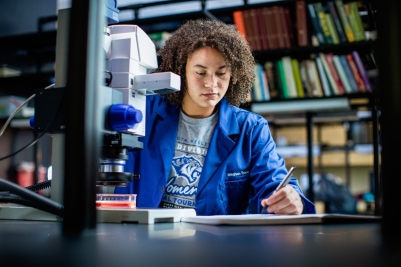
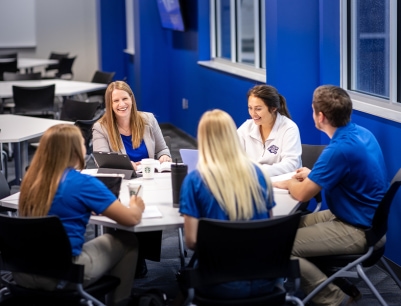
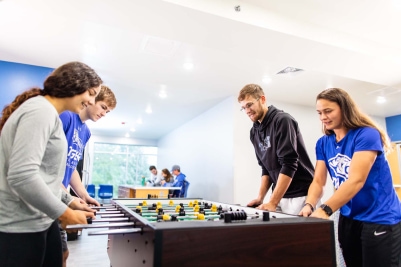
If you have a child or grandchild attending DWU, you have likely met their classmates. They are hardworking, humble and deeply committed to their futures. They come from towns across South Dakota and from communities around the world. Some are valedictorians. Some are the first in their families to attend college. Some are both.
Private higher education can sometimes feel mysterious from the outside. But when we pull back the curtain, what we see is not a narrow or exclusive community. Instead, we see a university working every day to help students from many different backgrounds pursue education, opportunity and lives of meaning and purpose.